
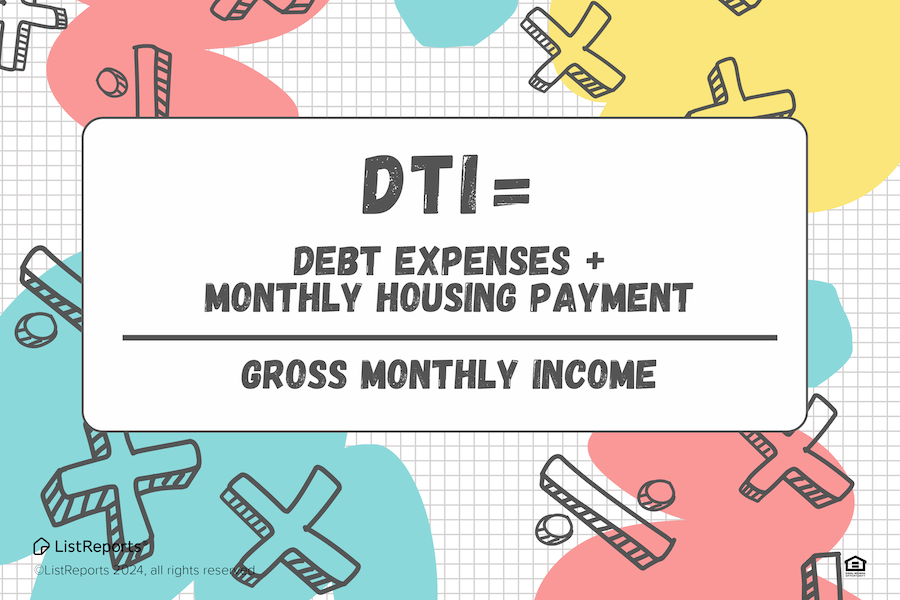
Debt-to-Income ratio (DTI) is a crucial financial metric that lenders use to assess your ability to manage your debts and take on additional financial obligations, such as a mortgage payment. In this blog post, we’ll delve into what DTI entails, how it’s calculated, and why it’s important when considering home ownership.
What is DTI?
DTI represents the percentage of your gross monthly income that goes toward paying off your monthly debts, including housing expenses such as mortgage payments, property taxes, and homeowners insurance, as well as other debts like credit card bills, student loans, and car payments.
How is DTI Calculated?
To calculate your DTI, add up all your monthly debt payments and divide them by your gross monthly income. Then, multiply the result by 100 to get the percentage. For example, if your total monthly debt payments amount to $2,000 and your gross monthly income is $6,000, your DTI would be 33.33%.
Why is DTI Important for Homebuyers?
Lenders use DTI as a key factor in determining your eligibility for a mortgage loan. A lower DTI ratio indicates that you have more disposable income available to cover your monthly mortgage payments, making you a less risky borrower in the eyes of lenders. Conversely, a higher DTI ratio suggests that you may have difficulty managing additional debt, which could affect your ability to make timely mortgage payments.
How to Manage Your DTI When Buying a Home
- Assess Your Current Debt Situation: Take stock of all your existing debts and calculate your DTI to understand where you stand financially.
- Determine Your Budget: Based on your DTI and financial goals, establish a budget for your monthly housing expenses, including mortgage payments, property taxes, and insurance.
- Shop Within Your Means: When searching for a home, focus on properties that fit comfortably within your budget and DTI limits to avoid overextending yourself financially.
- Pay Down Debt: Consider paying off existing debts or consolidating them to lower your DTI ratio and improve your chances of qualifying for a mortgage loan with favorable terms.
- Increase Your Income: Explore opportunities to boost your income through side gigs, freelance work, or career advancement to reduce your DTI ratio and increase your borrowing capacity.
By understanding and managing your DTI ratio effectively, you can position yourself for successful home ownership while maintaining financial stability and security. Remember, a lower DTI not only improves your chances of qualifying for a mortgage but also ensures that you can comfortably afford your monthly housing expenses without undue financial strain.
If you’re considering a move or investment and require a trusted Real Estate Broker, we’re here to assist you. Contact us via email at TEAM@McDanielCallahan.com, complete the form below, or give us a call at 925-838-4300. We are ready to provide expert guidance and support for all your real estate needs. Terry McDaniel DRE License #00941526


 Find a Broker™